Discover the mystical land of Ladakh, where ancient monasteries, dramatic landscapes, and high-altitude lakes come together to create an unforgettable experience. This 5N/6D tour package begins with a warm welcome at Leh Airport and takes you through iconic destinations like Nubra Valley, Pangong Lake, and the vibrant town of Leh. From camel rides on sand dunes to serene moments at monasteries and scenic drives through some of the world’s highest passes, this journey is perfect for nature lovers, adventure seekers, and peace finders alike.
Price Includes
Price Excludes
Leave behind the ordinary and step into the majestic realm of Ladakh — a land of high passes, crystal-clear lakes, ancient monasteries, and a culture deeply rooted in peace and tradition. From the moment you land in Leh, you’ll feel the magic of the mountains calling you into a world unlike any other.
Your Ladakh journey begins as you arrive at Kushok Bakula Rimpochee Airport in Leh, one of the highest commercial airports in the world. Upon arrival, our representative will greet you and transfer you to your hotel for check-in.
Since Leh is located at a high altitude of approximately 11,500 feet above sea level, the first day is reserved for acclimatization. Resting on the first day allows your body to adjust to the lower oxygen levels and helps prevent altitude sickness.
After settling into your hotel, spend the day relaxing and hydrating well. Light walks in the evening are recommended if you feel comfortable.
Later in the evening, you may explore the local market area of Leh, which reflects Ladakh’s blend of Tibetan and Himalayan culture.
Things to explore in Leh market:
Several cafés and bakeries also serve Tibetan and Ladakhi cuisine such as momos, thukpa, and butter tea.
The relaxed first day prepares you for the upcoming high-altitude journeys across Ladakh’s mountains and valleys.
Overnight Stay: Leh
After breakfast, begin a half-day sightseeing tour exploring the cultural and historical landmarks around Leh. The route follows the Indus Valley, one of the most historically significant regions of Ladakh.
The Hall of Fame is a museum maintained by the Indian Army that highlights the bravery of soldiers who served in Ladakh and during the Kargil War.
The museum displays military artifacts, photographs, and exhibits about the harsh climate and geography of the region.
Located about 25 km from Leh on the Leh–Srinagar highway, Gurudwara Pathar Sahib is a revered Sikh shrine dedicated to Guru Nanak Dev Ji.
The peaceful Gurudwara sits amid dramatic mountain landscapes and is maintained by the Indian Army.
Magnetic Hill is famous for a fascinating optical illusion where vehicles appear to move uphill when placed in neutral gear. The phenomenon is caused by the unique alignment of the surrounding landscape.
This unusual natural effect makes Magnetic Hill one of the most intriguing stops along the Leh–Kargil route.
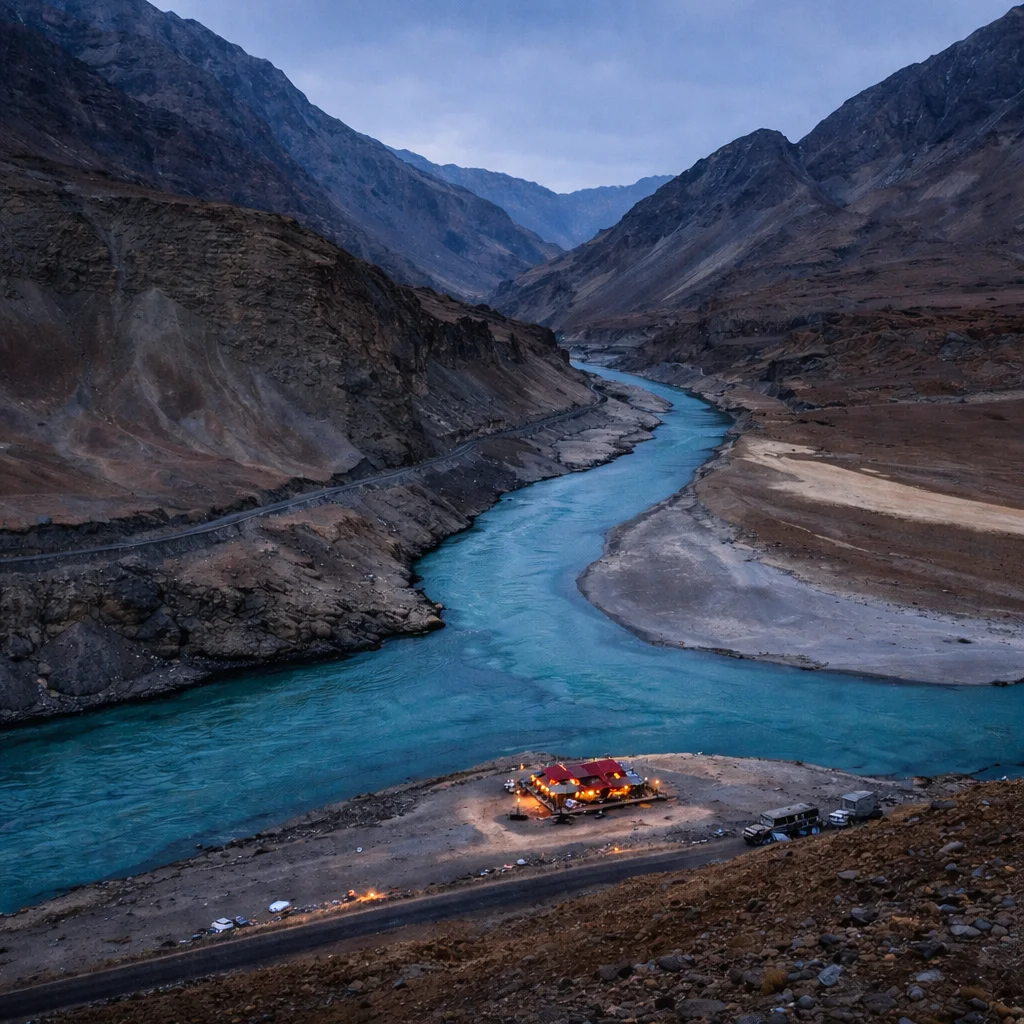
Sangam is the meeting point of the Indus and Zanskar rivers. The contrasting colors of the two rivers create a striking visual effect, making it a popular photography location.
During summer months, adventure enthusiasts can also enjoy river rafting on the Zanskar River.
In the evening, visit Leh Palace, a historic royal residence built in the 17th century by King Sengge Namgyal. The architecture resembles the famous Potala Palace of Lhasa.
The palace offers sweeping views of Leh town and the surrounding mountain ranges.
End the day at Shanti Stupa, a white-domed Buddhist monument located on a hill overlooking Leh.
The stupa offers one of the best sunset viewpoints in Ladakh with panoramic views of the Indus Valley and Leh town.
Overnight Stay: Leh
After an early breakfast, begin the journey toward Nubra Valley via Khardung La Pass. The road climbs steadily into the Ladakh mountain range, offering breathtaking views of snow-covered peaks and rugged terrain.
Khardung La is considered one of the highest motorable roads in the world and serves as the gateway between Leh and Nubra Valley.
The pass historically formed part of the ancient Silk Route connecting Ladakh with Central Asia.
Travelers usually stop here briefly to take photographs and enjoy the spectacular mountain scenery.
After crossing Khardung La, the road descends into Nubra Valley, where the landscape changes dramatically. The valley lies between the Karakoram and Ladakh mountain ranges and is nourished by the Shyok and Nubra rivers.
The region is famous for its fertile riverbeds, desert landscapes, and stunning mountain views.
Diskit Monastery is the largest and oldest monastery in Nubra Valley. The monastery sits on a hilltop and offers breathtaking views of the surrounding valley.
The highlight of the monastery is the towering statue of Maitreya Buddha, symbolizing peace and protection for the region.
Hunder is known for its cold desert landscape where sand dunes appear amid snow-capped mountains.
This rare combination of desert terrain and Himalayan scenery makes Hunder one of the most unique places in Ladakh.
Activities in Hunder:
After exploring the dunes, check into your hotel or camp in Nubra Valley and relax for the evening.
Overnight Stay: Nubra Valley
After breakfast at your hotel or camp in Nubra Valley, begin the scenic journey toward Pangong Lake. The drive follows the Shyok River route, which connects Nubra Valley to Pangong Lake through remote mountain landscapes and small Ladakhi settlements.
This route is known for its dramatic terrain, where barren mountains, rocky valleys, and riverbeds create constantly changing scenery. The Shyok River flows alongside parts of the road, carving deep valleys through the rugged Himalayan terrain.
The Shyok River is a major tributary of the Indus River and flows through the remote regions of Ladakh. The road along the Shyok valley passes through small villages such as Durbuk and Tangtse, offering glimpses into traditional Ladakhi life.
Stone houses, prayer flags, and small Buddhist shrines can often be seen along the route, reflecting the region’s deep spiritual heritage.
Pangong Lake is one of the most spectacular high-altitude lakes in the Himalayas. Stretching over 134 kilometers, the lake extends across the border between India and Tibet (China), with roughly one-third of the lake located in India.
The lake is famous for its constantly changing colors. Depending on sunlight and weather conditions, the water shifts between deep blue, turquoise, and emerald green.
The barren mountains surrounding the lake reflect beautifully on the water’s surface, creating one of the most photographed landscapes in Ladakh.
Things to experience at Pangong Lake:
After reaching Pangong Lake, check into your lakeside campsite and enjoy the calm atmosphere of this remarkable natural setting.
Overnight Stay: Pangong Lake Campsite
Wake up early to witness the sunrise over Pangong Lake, when the first rays of sunlight illuminate the mountains and water with golden hues.
After breakfast, begin the return journey toward Leh via Chang La Pass.
Chang La Pass is one of the highest motorable passes in Ladakh and serves as the gateway between Pangong Lake and the Indus Valley.
The pass offers breathtaking views of snow-covered peaks, glaciers, and rugged mountain landscapes. Due to the high altitude, travelers usually stop here briefly for photographs before continuing the drive.
Located about 45 km from Leh, Hemis Monastery is the largest and one of the wealthiest monasteries in Ladakh. The monastery belongs to the Drukpa lineage of Tibetan Buddhism.
It is famous for the annual Hemis Festival, where monks perform traditional masked dances known as Cham.
The monastery complex houses ancient thangkas, prayer halls, and Buddhist relics reflecting Ladakh’s deep spiritual heritage.
Shey Palace once served as the summer residence of Ladakhi kings. The monastery houses a massive copper-gilt statue of Shakyamuni Buddha, one of the largest Buddha statues in Ladakh.
The surrounding agricultural fields contrast beautifully with the barren mountains, making Shey one of the most peaceful stops along the Indus Valley.
Thiksey Monastery is one of the most impressive monasteries in Ladakh. Built on a hill overlooking the Indus Valley, the monastery’s architecture resembles the famous Potala Palace in Tibet.
The highlight of Thiksey is the two-story statue of Maitreya Buddha, which is considered one of the most beautiful Buddha statues in Ladakh.
After visiting the monasteries, continue the drive back to Leh.
In the evening, you can explore the lively Leh market area.
Popular things to do in Leh town:
Overnight Stay: Leh
After breakfast, check out from your hotel and transfer to Kushok Bakula Rimpochee Airport in Leh for your onward journey.
As your flight departs from the high-altitude airport, you will get one final aerial view of Ladakh’s dramatic mountain landscapes.
Your Ladakh adventure concludes with unforgettable memories of high mountain passes, crystal-clear lakes, ancient monasteries, and the unique culture of the Himalayan region.
The best time is from May to September, when the weather is pleasant, roads are open, and all major attractions are accessible.
Yes, since Ladakh is at a high altitude (above 11,000 ft), mild altitude sickness is common. It’s recommended to rest on the first day and keep yourself hydrated.
We provide comfortable hotels and deluxe camps (especially near Pangong & Nubra) with basic modern amenities and warm hospitality.
Yes, Inner Line Permits (ILPs) are mandatory for Indian and foreign travelers. We arrange all required permits as part of the package.
The tour is manageable, but due to the high altitude and long travel hours, it’s best suited for physically fit travelers above 5-8 years old. Consultation with a doctor is advisable for senior citizens.
+91700-9597-673
rsv@manalitraveladventure.com